

How Does a Rain Sensor Work and How It Saves You Money?
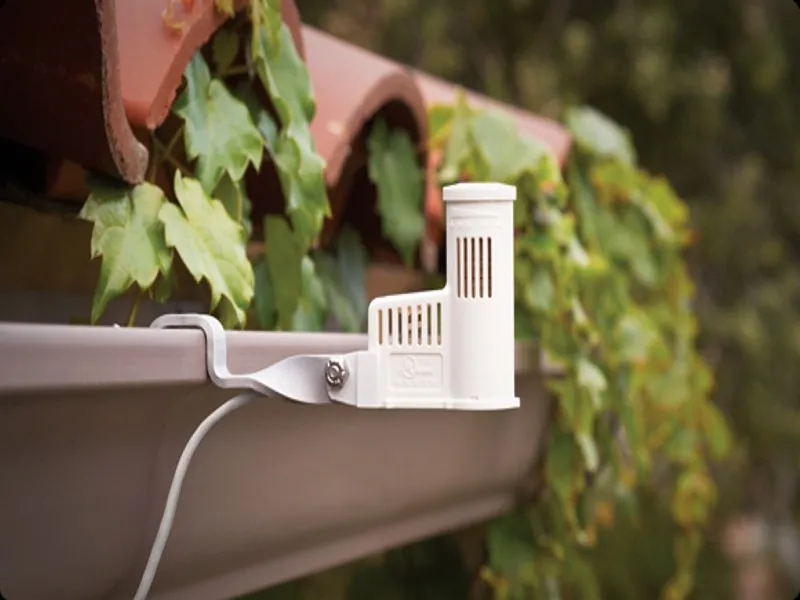
The Simplest Way to Stop Wasting Water
Have you ever seen irrigation sprinklers running in the middle of a heavy downpour? It looks ridiculous, and from an economic perspective, it’s a complete waste. In 2026, with the growing focus on ecology and water costs, a rain sensor is an essential safety feature for every smart irrigation system.
The Principle of Operation: No Complex Electronics
Most modern rain sensors (such as those from the Hunter brand) don't rely on complex digital sensors that could easily break. Instead, they work on a surprisingly simple yet reliable mechanical principle:
- Hygroscopic Cork Discs: Inside the sensor, there are several rings made of a specialized material similar to cork.
- Expansion After Rain: When it starts to rain, these discs absorb moisture and expand in volume.
- Breaking the Circuit: The expanding cork physically pushes a switch that breaks the electrical circuit to the controller. The controller then receives a signal: "It's raining, do not open the valves."
- Drying Out: As soon as the rain stops and the cork dries out again, it shrinks back to its original size, the circuit reconnects, and the irrigation resumes its normal schedule.
Quick Response™ Technology: Stopping in the First Minute
Older sensor models had to accumulate a certain amount of water before they could shut the system down. Modern sensors in 2026 feature Quick Response technology, which can shut off the irrigation during the very first drops of rain, saving water instantly.
How Does the Sensor Save Your Wallet?
The investment in a rain sensor typically pays for itself within the first season. How is this possible?
- Direct Water Savings: An average rainy week can mean saving hundreds of gallons of water that would otherwise be wasted on saturated soil.
- Lawn Health: Too much water (rain + irrigation) leads to root rot and fungal diseases. The sensor protects your lawn from disease, saving you money on expensive chemicals and fertilizers.
- Component Longevity: When the system isn't running unnecessarily, you reduce wear and tear on your pump, valves, and sprinkler heads.
Did You Know? A high-quality wireless rain sensor has a range of up to 800 feet (250 meters), and the battery lasts up to 10 years. This means you don't have to worry about maintenance at all.
Conclusion: A Small Helper with a Huge Impact
A rain sensor is the silent guardian of your garden. It costs a fraction of the total system price, but its benefits for your wallet and the environment are massive. If you want an irrigation system that "thinks," a rain sensor should be an indispensable part of it.