

Polievam.sk - Custom automatic irrigation

Blog

Tips and advice on irrigation, gardens and pump technology.

Green Lawn While on Vacation: Irrigation as Your Garden’s Insurance

Green Lawn While on Vacation: Irrigation as Your Garden’s Insurance

Deserved Rest or Worrying About Your Garden? Don't Risk Thousands You’re planning your summer vacation, packing your bags, and looking forward to relaxing. But somewhere in the back of your mind, a question lingers: "In what condition will I find my garden when I return?" In 2026, when heatwaves arrive suddenly and with extreme intensity, just seven days without water can cause your investment in turf and ornamental plants to literally evaporate. Many homeowners invest thousands of dollars into high-quality topsoil, premium sod, and mature trees. Leaving this asset at the mercy of random rainfall or the reliability of a neighbor with a hose is a massive gamble. Smart automatic irrigation is not a luxury accessory—it is the only functional insurance policy for your garden. Why a Neighbor with a Hose is Not the Solution Relying on good relationships is fine, until the health of your lawn is at stake. Manual watering can never achieve the precision and efficiency of an automated system. Lack of Uniformity: A neighbor doesn't know that your lawn needs exactly 5 liters per m² in the shade and 8 liters in the scorching sun. The result? Waterlogged patches and burnt sections. The Wrong Timing: The best time to water is between 3:00 AM and 5:00 AM. Is anyone really going to wake up for you at that hour? Accountability: Do you want to return from vacation and face an awkward conflict because your expensive lawn turned yellow under a friend's watch? Smart Technology: Your Digital Gardener on Your Phone Smart irrigation (such as the Hydrawise system) works even while you are lying on a beach thousands of miles away. It’s not just a timer. It’s a sophisticated algorithm that monitors the weather forecast for you. If a storm breaks out back home, the system turns the watering off. However, if a heatwave is approaching, it automatically increases the intensity. Through a mobile app, you have absolute control and visual confirmation at any time that your oasis is being cared for. That is the true peace of mind you are paying for. An Investment Protection That Pays for Itself From a business strategy perspective, turnkey irrigation is a low one-time investment that protects a high-value real estate asset. Preserving Greenery Value: The cost of mature trees and shrubs in 2026 can be hundreds of dollars per piece. One dried-out hedge wall will cost you more than the entire irrigation control unit. Water Savings: A smart system doesn't waste. It waters only when necessary. You save water and money—crucial in today’s economy. Maintenance-Free Beauty: A garden should serve you, not the other way around. Automation gives you back hours of free time every week. Be Honest: How much did it cost to landscape your garden? $5,000, $15,000, or more? Smart irrigation represents a fraction of that sum, yet it is the single factor that determines whether your garden will still exist next year. Conclusion: A Vacation Without Regrets Don’t leave the fate of your lawn to chance. A modern home in 2026 requires modern solutions. Turnkey smart irrigation is an investment in your freedom. Return from your vacation to a garden that is even greener and more beautiful than when you left.
Read article
Turnkey Irrigation vs. Self-Installation: An Honest Comparison

Turnkey Irrigation vs. Self-Installation: An Honest Comparison

The Modern Gardener's Dilemma: Save Money or Buy Time? In 2026, access to information is easier than ever. Online tutorials create the impression that anyone can build an automatic irrigation system over a weekend with just a shovel. However, the reality is often far more complex. The decision between turnkey realization and installation using your own resources is not just about the numbers at the bottom of an invoice. It is a choice between technical certainty and a risk that may only surface after months of operation. If you are considering which path to take, you must ask yourself: What is the value of your free time, and how much stress are you willing to invest in solving technical problems that a professional team handles as a matter of course? Self-Installation: The Allure of Savings Can Be Deceptive The main motivator for working with your own resources is the saving on labor costs. At first glance, it looks attractive—you only pay for materials and do the work yourself. However, there are factors that are rarely included in the initial budget: Time Investment: What a professional crew finishes in 2 days usually takes a beginner 3 to 4 weekends. This is time you could have spent with your family, resting, or on other productive activities. Purchasing Errors: Without a precise hydraulic plan, amateurs often buy components that don't work together or have unsuitable parameters. Exchanges and shipping add to the final cost. Physical Demand: Excavation work in compacted soil or clay is extremely strenuous. Professionals use trenchers that minimize lawn damage and speed up the process significantly. Risk of Failure: The biggest disadvantage is the lack of a warranty on the work. If the system bursts after winter or sprinklers fail to pop up, all repair costs are your responsibility. Turnkey Irrigation: Investing in Peace of Mind and Quality When you hire a professional firm for a turnkey project, you aren't just buying materials; you are buying a guaranteed result. Professional realization in 2026 offers benefits that are very difficult to achieve alone: Expert Project Design: Every nozzle is placed based on precise overlap calculations (Head-to-Head). The result is a perfectly green lawn without dry spots. Speed and Cleanliness: Modern machinery creates trenches for pipes with minimal intervention in the existing garden. Within a few days, you won't even know any digging took place. Smart Configuration: A firm doesn't just install the system; they program it, connect it to your WiFi, and train you on how to use it effectively. Warranty and Service: If any fault occurs, you simply pick up the phone and let someone else solve it. This usually includes professional winterization with a compressor—the key to long-term durability. Comparison Table: Where Does the Truth Lie? Criterion Self-Installation Turnkey Realization Price Lower by approx. 40–50% (materials only) Higher (materials + professional labor) Time High (weeks of learning and labor) Minimal (1–3 days of realization) Technical Quality Often undersized (pressure errors) Precisely calculated hydraulics Warranty None (only on individual parts) Comprehensive warranty on the whole project Equipment Hand tools / expensive rentals Own professional mechanization The Hidden Costs of the "Cheap" Way Many owners who start working with their own resources end up calling a professional firm to fix or rebuild the system. Often, this involves re-digging pipes laid too shallow that freeze in winter or replacing control units that cannot handle smart functions. These "additional repairs" ultimately drive the cost of self-installation above the level of the original turnkey offer. Conclusion: Which Path is Right for You? Self-installation is suitable for technically skilled individuals with plenty of free time who find garden work relaxing and are not deterred by potential failure or the need for constant fine-tuning. Turnkey irrigation is the choice for those who value their time, want the certainty of a top-tier result, and seek a partner to take responsibility for the health of their garden. In 2026, when efficiency is paramount, professional installation proves to be the most economically sound solution in the long run.

Read article
Smart Irrigation via Mobile: Save 40% Water with Weather Forecasts

Smart Irrigation via Mobile: Save 40% Water with Weather Forecasts

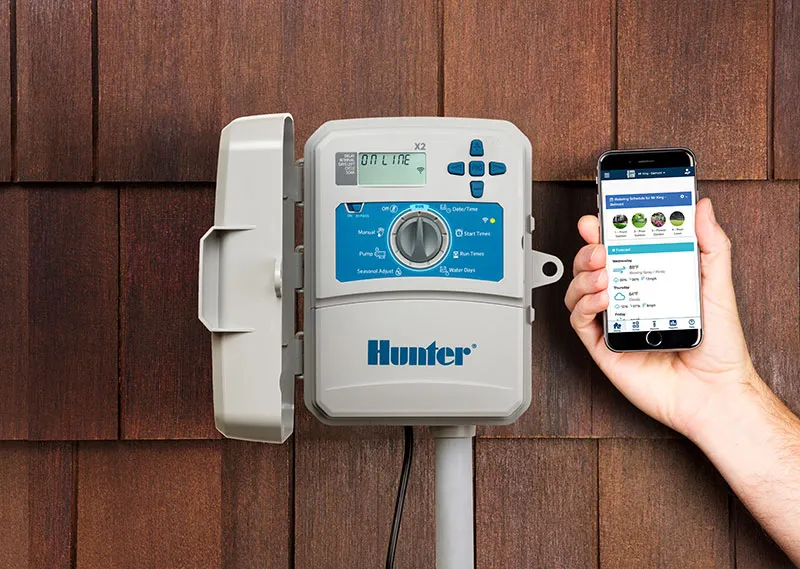
Watering Revolution: When Your Garden Monitors the Weather for You In 2026, automatic irrigation is no longer just a simple timer mounted on a garage wall. Modern technology has moved garden care into the era of the Internet of Things (IoT). Smart irrigation controlled by mobile currently represents the most efficient way to keep a garden vital while radically reducing water bills. While older systems water on a fixed schedule regardless of whether it’s raining, smart systems make decisions based on real-time data from weather stations. Switching to smart management is not just about the convenience of turning on the system from your couch. It is primarily about a responsible approach to water resources. Thanks to integration with online meteorological services, the system can predict rainfall and adjust the irrigation calendar before the first drop of rain even falls. How Does Predictive Watering Work? At the heart of a smart system is a WiFi-enabled controller (such as the industry-leading Hydrawise system by Hunter). This software constantly monitors local conditions and adjusts watering based on four key factors: Probability of Precipitation: If the forecast reports a high chance of rain, the system postpones the planned cycle. Current Temperature: During extreme heatwaves, the system automatically extends watering times to prevent plant stress. Wind Speed: In high winds, watering is paused because the water wouldn't hit the target areas but would be dispersed into the surroundings. Air Humidity: The system calculates the rate of evaporation (evapotranspiration), optimizing every single drop of water. Saving Up to 40% Water: The Numbers Don't Lie Many garden owners ask if the investment in smart management truly pays off. Experiences from turnkey realizations in 2026 confirm that water savings reach 30% to 40% compared to conventional automatic systems. Standard irrigation without smart functions waters even when the soil is saturated after a storm or when it’s cloudy and evaporation is low. In such days, a smart system skips watering entirely or shortens it by the necessary ratio. With large lawn areas and increasing water rates, the investment in a smart controller typically pays for itself within the first two seasons. Everything Controlled From Your Pocket The mobile app is more than just a remote control. It is your personal gardener, providing an instant overview of the system status no matter where you are in the world: Fault Notifications: If a pipe bursts or a valve fails, the system immediately sends an alert to your mobile. Consumption History: You have a precise overview of exactly how many liters of water you have used in individual zones. Remote Diagnostics: A professional firm can check your system remotely without a physical visit, saving you time and service costs. Expert Tip: For maximum efficiency, we recommend combining a smart controller with a flow meter. It can detect even microscopic water leaks that would otherwise remain hidden underground for months. Sustainability and Lawn Health Beyond financial savings, smart irrigation has a direct impact on vegetation health. Excessive watering, common in systems without smart management, leads to nutrient leaching from the soil and promotes fungal growth. The smart algorithm ensures plants receive exactly as much moisture as they need for deep rooting. The result is a lawn that is more resistant to drought and disease. Conclusion: The Garden of the Future is Already Here In 2026, mobile-controlled smart irrigation is the standard for every modern new build. The combination of comfort, financial savings, and an ecological approach makes this technology one of the smartest investments for your exterior. Stop throwing money away on water your garden doesn't need and switch to turnkey smart management.

Read article
5 Self-Installation Mistakes: Why Does Your Lawn Keep Turning Yellow?

5 Self-Installation Mistakes: Why Does Your Lawn Keep Turning Yellow?

When Automation Isn't Enough: Why Yellow Patches Ruin Your Garden You decided to install your irrigation system using your own resources, purchased the components, and spent weekends digging trenches. The system is running, the controller is set, yet despite your efforts, unsightly yellow patches have appeared on the lawn over time. In 2026, we know that automatic watering is not a guarantee of success if a professional design is lacking. A yellowing lawn is a clear signal that a system built by an amateur has technical deficiencies. Here are the 5 most common mistakes that lead to the failure of self-installation projects. 1. Insufficient Sprinkler Overlap (Lack of Head-to-Head Coverage) This is by far the most common cause of yellowing grass. During self-installation, homeowners often try to save money by reducing the number of sprinklers, placing them so that their water streams only barely touch. This is a fatal mistake. Every sprinkler distributes the most water in its middle range and the least directly underneath its head. Professional turnkey realization requires 100% overlap, technically known as "Head-to-Head" coverage. This means that the nozzle of one sprinkler must spray all the way to the base of the next sprinkler. If you break this rule, "blind spots" are created where the lawn receives only a fraction of the necessary moisture. During the first summer heatwaves, these areas turn yellow almost immediately. 2. Incorrectly Calculated Hydraulics and Fluctuating Pressure A lawn can also turn yellow if the sprinklers are functioning, but their water distribution is compromised by low pressure. In self-installation projects, precise calculations of flow rate and pressure loss in the pipes are almost always neglected. If you connect too many nozzles to a single zone, the pressure in the system drops below the operational level. The nozzles then fail to atomize the water into fine droplets and instead "lazily" leak out. The water does not reach the planned distance, and the space between the sprinklers remains dry. Experts designing a system always start by measuring the dynamic pressure and then divide the garden into sectors so that every nozzle operates within its ideal pressure range. 3. Mixing Different Nozzle Types in One Zone A frequent error in home-built systems is connecting static (spray) nozzles and rotary sprinklers to a single common valve. However, each of these types has a completely different precipitation rate. Static nozzles discharge a large volume of water in a short amount of time. Rotary sprinklers require a much longer watering interval to deliver the same amount of water. If you combine them, the result is disastrous: one part of the lawn becomes waterlogged, leading to mold and fungal issues, while the other part under the rotary nozzles turns yellow from drought because it wasn't given enough time to receive sufficient water. A professional system strictly separates these technologies into independent, programmable zones. 4. Improper Timing and Duration of Watering Yellowing is not always caused by a lack of water; paradoxically, it can also result from diseases caused by an excess of water at the wrong time. Many people who install their own irrigation set the schedule for evening hours. This leaves the grass wet all night long, which, combined with summer heat, creates the perfect environment for fungal diseases and root rot. A professionally designed smart irrigation system utilizes the night/early morning window (between 3:00 AM and 6:00 AM). At this time, evaporation is minimal, there is no wind, and the lawn has time to dry quickly after sunrise. Systems without intelligent sensors also tend to water during rainfall, which "drowns" the lawn—another cause of an unhealthy yellow color. 5. Absence of Filtration and System Clogging If you use well water or rainwater, filtration is a critical point of success. In self-installation projects, high-quality filters are often omitted to save on initial costs. However, fine impurities and sand gradually clog the nozzle screens. A clogged nozzle stops spraying at a uniform angle, creating unwatered spots. Even if the sprinkler appears to be working, its efficiency drops by dozens of percent. In a professional turnkey installation, multi-stage filtration is the heart of the entire system, ensuring that every drop of water ends up exactly where it should, even after years of operation. Expert Experience: Most homeowners who built their own irrigation system spend more money over three years on re-seeding yellow lawns and repairing components than the original professional installation would have cost. Conclusion: Don't Turn Your Garden into a Testing Laboratory A yellow lawn is a cry for help. If you made any of these mistakes during your self-installation, the fix will cost you not only more money but also the time spent re-excavating your garden. Professional turnkey irrigation is not a luxury; it is the technical certainty that your lawn will be deep green, healthy, and free of dry spots throughout all of 2026.

Read article
Automatic Irrigation in 2026: Cost, ROI & Expert Pricing

Automatic Irrigation in 2026: Cost, ROI & Expert Pricing

The Myth of Price per $m^2$: Why Experts Won't Give a Quote Over the PhoneOne of the most frequent questions we encounter during turnkey realizations is: "What is the price per square meter of irrigation?" The answer is direct and often surprising: Price per $m^2$ does not exist in professional irrigation. If a contractor offers you a flat rate based solely on area without seeing your plot or a technical design, you should proceed with extreme caution.In 2026, the price of an automatic irrigation system is primarily determined by the complexity of the terrain, not its raw size. Consider two plots of $500\ m^2$. The first is a clear, rectangular lawn. The second is a complex garden with islands, walkways, rockeries, and various types of planting. Although the area is identical, the second plot requires twice as many sprinklers, more electromagnetic valves, and more intricate piping. The more "complex" the garden, the more technically demanding—and logically more expensive—the system becomes.Components of Irrigation Pricing: The Formula for a Successful RealizationWhen budgeting for a turnkey system, you must account for three fundamental components that make up the final invoice: Materials: High-quality components (sprinklers, nozzles, valves, controllers, sensors, pipes, and fittings).Labor and Professional Assembly: Excavation, component installation, software configuration (e.g., Hydrawise), pressure testing, and precise nozzle calibration.Technological Infrastructure: Pumping technology, filtration, or connection to the water source (well vs. municipal supply).The Labor-to-Material Ratio: Why Experts Charge 1:1In the irrigation segment, there is an unwritten rule regarding the ratio of labor costs to material costs. You will find various offers on the market, usually in these ranges:Ratio 1 : 0.5: Often offered by seasonal workers or firms without deep specialization. However, lower labor costs often result in unprofessional pipe laying (too shallow) or poor hydraulic design, leading to expensive future repairs.Ratio 1 : 1 and above: The standard for true experts and specialized firms. In 2026, it holds true that professional turnkey installation requires an investment in labor at least equal to the cost of materials.Why is this the case? An expert isn't just selling you "buried pipes." They are selling you a precise hydraulic calculation, a warranty on the entire work, meticulous setting of precipitation rates, and a guaranteed system lifespan of over 15 years. For complex and segmented plots, labor costs may even exceed material costs because installation in narrow spaces or among expensive mature planting is extremely time-consuming and technically demanding.Crucial Warning: Cheap labor is the most expensive investment in irrigation. If the system is installed unprofessionally, the first winter or water pressure fluctuations can cause damage that far exceeds any "savings" made on the initial installation.Return on Investment (ROI): When Does the System Pay for Itself?Investing in turnkey automatic irrigation is not just a luxury expense. It is a data-backed economic decision. We calculate the ROI of a system in 2026 through three main factors:Water Savings: Thanks to smart sensors and night-time cycles, you use 30% to 50% less water than with manual hose watering. With rising water and sewage rates, this is a significant annual saving.Protection of Landscape Investment: A new lawn and ornamental planting for a family home cost thousands of dollars. One extremely dry summer without irrigation can wipe out this investment. Irrigation is the "insurance policy" for your garden.Property Value Increase: A home with a functional, professionally installed irrigation system has a higher market value and is demonstrably easier to sell.The average financial return on a professional system, when accounting for water savings and the owner's valuable time, ranges between 3 to 5 seasons. Terrain Complexity as the Main Price DriverWhen calculating a turnkey price, we always look at the number of required zones (sections). The more complex the garden:The more electromagnetic valves are needed for proper pressure distribution.The more meters of piping and fittings are used to navigate obstacles.The more powerful the controller (with a higher number of zones) is required.Therefore, irrigation for a small but complex front garden with many shrubs can be more expensive than for a large but empty football pitch.Conclusion: Quality That Pays OffThe price of turnkey automatic irrigation in 2026 reflects technological progress and the value of expert labor. If you are looking for a solution that will function without failure for many years, look for a partner who does not offer suspiciously cheap labor but guarantees quality at a 1:1 ratio to materials.Your garden is a living organism, and automatic irrigation is its circulatory system. Saving on expertise in this case is equivalent to gambling with the entire beauty and value of your home.

Read article
The Cost of "Do It Yourself": When Initial Savings Turn into a Nightfall Nightmare

The Cost of "Do It Yourself": When Initial Savings Turn into a Nightfall Nightmare

In 2026, the internet is flooded with tutorials on how to build a house, fix a car, or install an automatic irrigation system. On video, it looks simple: buy a few pipes, lay out some nozzles, and your garden turns lush green overnight. However, the reality in many backyards is drastically different. DIY irrigation projects end up requiring professional intervention in up to 70% of cases, often to save what remains of the original lawn and the homeowner's sanity. The problem is rarely a lack of handiness but rather a lack of specialized expertise in hydraulics and botany. Irrigation is not just about "burying hoses." It is a complex engineering task that must account for pressure losses, flow rates, fluid dynamics, and the specific needs of different soil types. If you make a mistake at the design stage, the result is a torn-up garden that stays bone-dry in one corner and turns into a moldy swamp in another. Most Common Mistakes That Will Cost You a Fortune When providing turnkey solutions, we increasingly encounter systems that homeowners built themselves in an attempt to save money. Here are the most common critical errors that lead to total system failure: Incorrectly Calculated Pressure and Flow: This is the "silent killer" of every DIY project. A homeowner buys nozzles with a 10-meter spray radius, but after activation, they find the water barely bubbles a few inches above the ground. Why? Because the pipe diameter is too small, the run is too long, or too many sprinklers are attached to a single zone that the water source cannot support. Lack of Head-to-Head Coverage: Amateurs often assume that if the water from one sprinkler reaches the next, it is sufficient. In reality, a sprinkler distributes the least amount of water directly underneath itself. Without 100% overlap (where one nozzle sprays all the way to the base of the next), chronic dry spots appear, eventually killing the grass. Poor Component Selection from Retail Stores: Consumer-grade kits from big-box retailers are not designed to handle "water hammers"—pressure surges that occur when valves shut off. This results in cracked valves, leaking joints, and hidden underground leaks that you only discover when you receive an astronomical water bill. Ignoring Zone Requirements: Lawns, shrubs, and raised vegetable beds have vastly different water requirements. DIY systems often group them all together, leading to a situation where the lawn thrives while the ornamental trees literally rot in oversaturated soil. Professional Insight: Repairing a poorly designed and already buried irrigation system often costs 50% to 80% more than a fresh professional turnkey installation. The reason is the difficulty of locating leaks, the need for excavation in finished landscapes, and the replacement of incompatible or low-quality parts. The Psychological Price of DIY: Constant Stress Instead of Relaxation A garden is meant to be a place of rest and regeneration. However, if you spend every weekend adjusting nozzles that get stuck or manually supplementing dry patches with a hose, the system is failing its primary purpose. Turnkey irrigation provides "peace of mind." You have the certainty that the system was designed by an expert who understands fluid dynamics and that every nozzle operates exactly as calculated. Furthermore, DIY installations often lack a conceptual solution for winter. A single drop of water left in a brass valve can freeze and shatter the entire valve manifold during winter. Professionals include drainage valves and compressor access points in turnkey installations, which are crucial for safely blowing out the system with air. This extends the lifespan of the equipment by decades. Why a Turnkey Project is Actually Cheaper in the Long Run When you add up the cost of materials (which you buy at retail prices), the hours spent studying manuals, buying specialized tools, and the subsequent endless repairs, professional installation is far more economical. A professional company also has access to wholesale pricing for premium components from brands like Hunter or Rain Bird and uses specialized machinery, like vibratory plows, that install pipes with minimal damage to your existing turf. Guaranteed Functionality: If the lawn dries out, the contractor bears full responsibility and must fix the issue at their own expense under warranty. Maximum Water Savings: A precisely calibrated system equipped with rain and soil moisture sensors uses 30–50% less water than a non-professional "DIY kit." Expert Soil Analysis: A professional can identify your soil type (clay vs. sandy) and set optimal irrigation intervals so the lawn’s root system can breathe and grow deep. Conclusion: Don't Risk a Ruined Garden The fear of making a mistake in irrigation is entirely justified. It is not just about technical functionality; it is about the overall aesthetic of your home. A beautiful, deep green lawn is a homeowner's calling card. Ruining it through unprofessional intervention hurts your wallet and your pride. Before you pick up a shovel and buy the first hose on sale, stop and think. Get a non-binding project quote from the experts. Turnkey irrigation is not an expense; it is an investment that protects your most valuable asset—your time. It ensures your garden stays in perfect condition without unnecessary excavations, puddles, or yellow patches.

Read article
Smart Turnkey Irrigation: Control Your Garden from Your Mobile Anywhere in the World

Smart Turnkey Irrigation: Control Your Garden from Your Mobile Anywhere in the World

The Future of Gardening: Why Intelligent Control is the Standard for 2026 We live in an age where we control heating, lighting, and security via smartphones. It was only a matter of time before this trend reached our gardens. Smart turnkey automatic irrigation is no longer just a futuristic gadget for tech enthusiasts. In 2026, it is a necessity for anyone who values their time and wants peace of mind regarding their landscape investment. Garden in the Cloud: What Can You Do with a Mobile App? Professional systems using platforms like Hunter Hydrawise transform simple watering into a highly intelligent process: Visual Zone Control: See exactly which part of the garden is watering and monitor real-time water usage. Remote Manual Activation: If you spot a dry area via security cameras, you can trigger an extra cycle with one click from your phone. Fault Alerts: If the system detects a leak or a faulty valve, it sends an instant notification, preventing water damage and high bills. Predictive Watering: Let the System Watch the Radar for You The greatest asset of a smart solution is Predictive Watering. The system communicates with local weather stations. If the forecast predicts rain, the system automatically delays the schedule. It also reacts to high winds or freezing temperatures, saving money and the environment.

Read article
Water and Money Savings: Why Turnkey Automatic Irrigation Beats the Hose

Water and Money Savings: Why Turnkey Automatic Irrigation Beats the Hose

In 2026, the question is no longer whether to water, but how to do it without breaking the bank. With rising water and energy utility costs, traditional manual watering has become an expensive luxury. If you want a green lawn and a full wallet, the key is efficiency through a professionally designed turnkey system. Many homeowners view automatic irrigation primarily as a comfort feature. However, in today’s economic and climate reality, it is a strategic technological measure to reduce household operating costs. The difference between amateur watering and a professional system can amount to hundreds of euros and thousands of liters of water wasted every season without any real benefit to your plants. Stop Pouring Money Down the Drain (Literally) Many garden owners believe that manual watering with a hose is the cheapest route because it requires no upfront investment. The opposite is true. Manual watering leads to extreme waste for several reasons. Human estimation is inaccurate – some areas get over-saturated while others suffer from drought, leading to soil fungus or the need for expensive re-seeding every spring. Furthermore, manual watering usually happens in the evening. From a botanical and economic standpoint, this is the worst possible time. The soil is heated after the day, and a massive amount of water evaporates before it even reaches the roots. A professional turnkey system operates at night or early dawn when evaporation is minimal, utilizing every drop 100%. Your investment in professional work starts paying off from day one. Did you know? During improper daytime watering, up to 30% of water evaporates due to air temperature and wind before reaching the roots. With a smart irrigation system featuring low-trajectory nozzles and night cycles, this problem is virtually eliminated. The 3 Pillars of Efficiency: How Professional Irrigation Saves You Money A turnkey system’s efficiency isn't just about it "turning on by itself." It’s the result of precise hydraulic calculations and professional-grade components. Here are three main factors that lower your bills: Precise Timing and Night Cycles: The system is set to run between 02:00 and 05:00. This is when water pressure is most stable and the lack of sunlight guarantees maximum absorption. This trains the lawn to draw water from deep within the soil, making it more resilient to heatwaves. Soil Moisture Sensors and Weather Forecasting: Modern turnkey installations include local weather stations and Wi-Fi modules. If it rained overnight or the soil is sufficiently moist, the sensor detects this and skips the morning cycle. You save money when nature does the work for you. Uniform Distribution and Overlap: A professional designer ensures "Head-to-Head" coverage. This prevents dry spots that would otherwise require manual touch-ups with a hose, wasting both water and your precious time. DIY vs. Professional Turnkey Irrigation: Where are the Hidden Risks? DIY might seem attractive for the price. However, in the long run, professional realization is much more cost-effective. Here is why: Consumption Gap: DIY systems often have inaccurate overlap, leading to 20-40% more water waste than professional systems. Durability: Retail hobby kits are made of low-grade plastics. Professional brands like Hunter or Rain Bird have a lifespan exceeding 15 years with minimal maintenance. Safety Risks: Improper underground pipe connections can lead to micro-leaks. A hidden water leak can cost more on your utility bill than the entire installation. Professionals perform pressure tests before burying the trenches. Warranty and Service: With a turnkey solution, you get a guarantee. If anything fails, you don't have to dig up the garden yourself – a service team handles it quickly under warranty. ROI: Due to water savings and plant health preservation, a professional system in 2026 typically pays for itself within 3 to 4 seasons. Smart Features That Pay for Themselves We are no longer just talking about mechanical timers. Modern turnkey automatic irrigation uses predictive algorithms. Wi-Fi controllers are now standard, connected to global weather servers. If the system knows a storm is coming later that day, it automatically adjusts or cancels the morning dose. Zoning is another massive saver. A professional system divides your garden based on plant types and sun exposure. A south-facing lawn needs a different volume of water than shaded ornamental trees. Drip irrigation, part of our turnkey solutions, delivers water directly to the roots, resulting in near-zero evaporation losses. Hydraulic Calculation: The Invisible Guard of Your Pump Incorrect pipe diameter can dramatically increase electricity costs. If pipes are undersized, friction is high, pressure loss is massive, and the pump must run longer at higher power. A professional designer calculates these losses so the technology operates in an optimal mode, saving energy and extending the lifespan of the pump system. Conclusion: Invest in Results, Not Experiments Turnkey automatic irrigation is not just about comfort. It’s about a responsible approach to your finances and the environment. In an era where water is becoming a scarce and expensive commodity, inefficient use is both costly and unsustainable. Professional design ensures that every euro spent on water ends up exactly where it belongs – in the roots. Switching to a smart automated system is one of the few home improvements with a clear ROI and an immediate positive impact on your property value.

Read article